
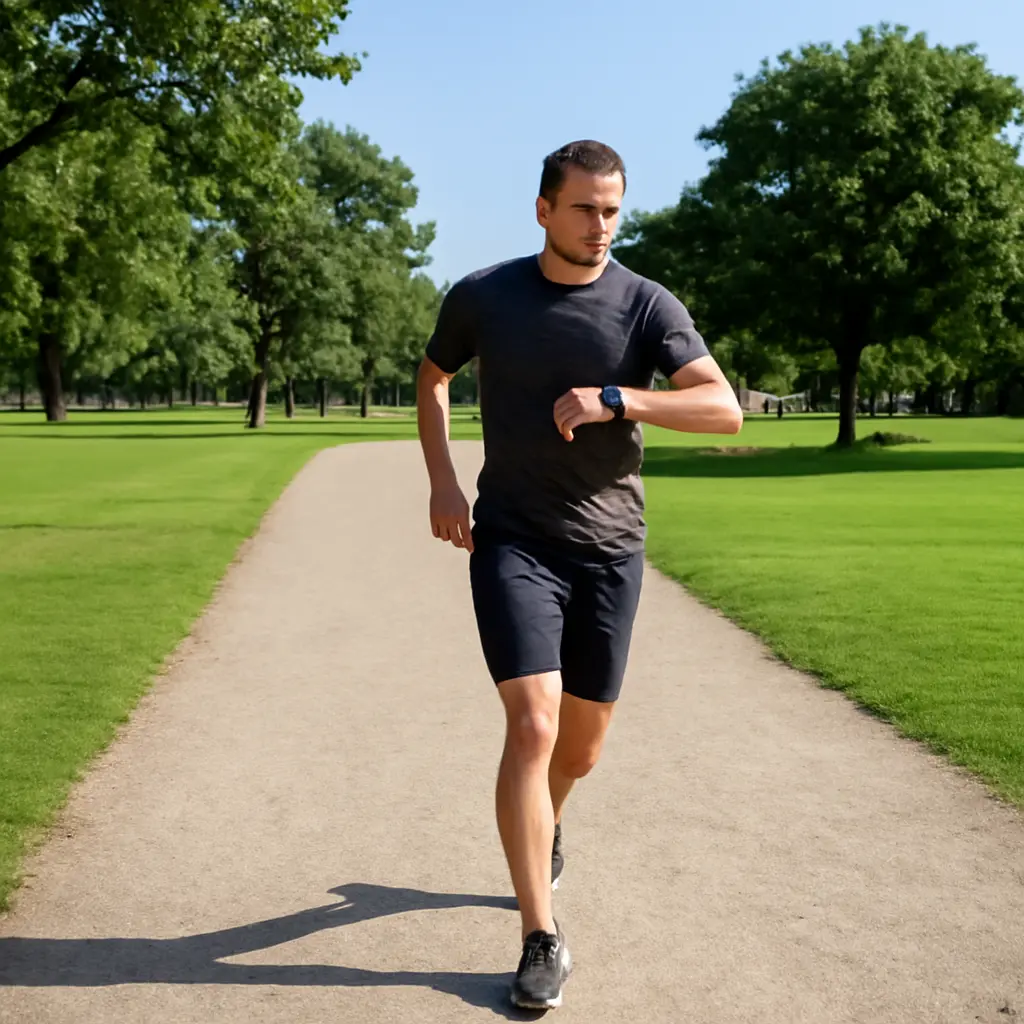
Pacing tools—such as timers, metronomes, interval plans, and workload dashboards—help people regulate how quickly they work, exercise, or practice. They do not literally rewire the brain on demand, but repeated use can train attention, timing, and self-regulation through practice and feedback. Research on motor learning and habit formation supports this more measured claim: external cues can guide performance, while repetition helps people build skills they can increasingly manage without the cue. The effects depend on the task, the quality of feedback, and whether users gradually practice at their own pace.
Pacing tools shape speed through attention and feedback
A pacing tool is an external aid that sets, signals, or measures the rate of an activity. A metronome marks beats, a countdown timer defines work intervals, and a running watch reports pace or elapsed time. In motor-learning research, the closely related concept of external pacing means using an outside rhythm or signal to organize movement. These tools can reduce the need to estimate time from scratch, making it easier to sustain a chosen tempo and notice when performance drifts.
The brain adapts through experience, not through a timer alone. Repeated practice can strengthen task-specific routines and improve the ability to anticipate cues, adjust actions, and maintain attention. The National Institute of Neurological Disorders and Stroke describes neuroplasticity as the nervous system’s ability to change its activity and organization in response to experience. That broad capacity helps explain why practice matters, but it does not mean every pacing app produces a measurable or permanent brain change.
External cues make timing more concrete
A regular cue turns an abstract instruction—“keep a steady pace”—into information that arrives at predictable intervals. For example, a musician can align a note with a metronome beat, while a runner can use an audio signal to avoid starting too fast. A cue can support timing and consistency, but its usefulness varies: a rhythm that suits one movement or person may feel distracting or too demanding for another.
Feedback helps people compare intention with performance
Feedback is information about the result of an action, such as split times, completed intervals, or the number of words written during a timed session. The U.S. National Library of Medicine’s review literature on motor learning distinguishes feedback about outcomes from the sensory information people receive while acting. When a tool makes a mismatch visible—such as a pace slower than the target—a person can adjust. Feedback is most useful when it is understandable and timely; excessive alerts can compete for attention rather than improve it.
Pacing tools build speed by structuring practice
Speed is not simply moving faster. In many tasks, it means completing work more efficiently while preserving accuracy, safety, or quality. Pacing tools can support that development by dividing practice into manageable periods, setting a realistic target, and making progress observable. This connects external pacing to several related approaches: interval training, tempo practice, timeboxing, and graded task practice.
Intervals alternate effort and recovery
Interval training alternates periods of higher effort with easier activity or rest. In exercise, this structure lets people practice brief bouts at a challenging pace without requiring the same intensity throughout an entire session. The Centers for Disease Control and Prevention recommends that adults aim for at least 150 minutes of moderate-intensity aerobic activity per week, or 75 minutes of vigorous activity, alongside muscle-strengthening activity on two days. Those are general health guidelines, not a prescription for interval intensity; people should adapt exercise to their health and fitness, and seek professional advice when appropriate.
A simple example is a beginner alternating brisk walking with easier walking, using a watch or timer to keep the bouts consistent. Over time, the person might increase the brisk interval or reduce recovery, but only if the effort remains manageable. The tool structures the session; it does not guarantee faster improvement or make overtraining safe.
Metronomes and tempo cues support skill practice
Tempo practice uses a steady beat to organize repeated movements, including musical passages, rehabilitation exercises, or sport drills. A learner may begin below the desired speed to preserve accuracy, then gradually increase the tempo as the action becomes reliable. This is a practical form of graded practice: the task becomes more demanding in small steps rather than through an abrupt push for maximum speed.
In clinical settings, rhythmic auditory stimulation has been studied as a way to cue walking. A 2017 review in Frontiers in Human Neuroscience describes research into rhythmic cues for gait rehabilitation, including work with people who have Parkinson’s disease or have experienced stroke. Such findings concern specific clinical populations and protocols; they should not be generalized to claim that ordinary metronome use treats neurological conditions. Rehabilitation plans should be guided by qualified clinicians.
Timeboxing can improve task initiation and focus
Timeboxing assigns a task a defined work period, often followed by a break. A timer can make starting less intimidating by replacing an open-ended demand with a clear, limited commitment. For example, a student might work on one section of an assignment for 25 minutes, then pause to review progress. The specific interval is a planning choice, not a scientifically established universal optimum; tasks differ in complexity, and some work benefits from longer periods without interruption.
For knowledge work, the appropriate measure is often not raw speed but useful output with acceptable quality. A timer may help someone notice avoidance or excessive switching, yet it cannot determine whether the work is accurate or complete. Pairing timed sessions with a brief quality check keeps pace from becoming the only goal.
Pacing tools support self-regulation when used flexibly
Self-regulation is the ability to monitor and adjust behavior in pursuit of a goal. Pacing tools can act as temporary scaffolds: they provide an outside signal while a person learns to estimate effort, recognize fatigue, and choose a sustainable rate. The strongest practical approach is usually not to obey the tool blindly, but to combine its information with bodily sensations, task demands, and performance quality.
Gradual progression turns targets into learning steps
A target pace should be challenging enough to focus practice but manageable enough to preserve form and accuracy. Begin with a baseline, choose a small adjustment, and review the result. In typing practice, for instance, a person can track both words per minute and error rate; in running, pace should be interpreted alongside effort, recovery, and conditions. Faster output accompanied by more errors or pain is not necessarily progress.
Reducing cue dependence helps reveal independent skill
A pacing aid can become a crutch if every action depends on an immediate prompt. To test whether a skill is becoming more self-directed, practitioners can gradually remove or soften cues: use the metronome for selected repetitions, check the watch less often, or complete a short interval without a countdown. This is a practical training strategy rather than a guarantee of transfer. Performance with a device and performance without it may differ, so both should be assessed when independence matters.
Rest and warning signs belong in the pacing plan
Pacing is also about limiting effort before fatigue undermines performance. In exercise, pain, unusual shortness of breath, dizziness, or worsening symptoms are reasons to stop and seek appropriate guidance. In desk work, sustained concentration may need breaks, while demanding tasks may require fewer interruptions. A tool should support judgment, not override it.
A practical method for using pacing tools
Use pacing tools as instruments for deliberate practice, not as proof that the brain is being “rewired” or that faster is always better. A simple process works across many settings:
- Choose a specific outcome, such as steadier running intervals, a more consistent musical passage, or a focused writing session.
- Measure a baseline that includes quality as well as speed where relevant.
- Select one cue or feedback measure and set a realistic starting pace.
- Practice consistently, changing only one demand at a time.
- Review results, including errors, fatigue, and recovery—not just the timer or pace number.
- Occasionally practice with fewer cues to check whether the skill is becoming independent.
A chart of pace and accuracy across several sessions can make progress easier to interpret. For example, plotting running interval pace alongside perceived effort—or typing speed alongside errors—shows whether speed is improving without an unacceptable quality trade-off.
Conclusion: pacing tools train consistency, not instant speed
Pacing tools make timing visible, provide feedback, and structure repeated practice. Metronomes, interval timers, and timeboxing systems can support attention and self-regulation, while gradual progression helps people test higher speeds without abandoning accuracy or safety. The evidence supports a careful conclusion: practice can change how skills are performed, but a device alone does not prove that the brain has been permanently rewired.
Choose a tool that fits the task, track quality as well as pace, and adjust targets when fatigue or errors rise. For further reading, consult established guidance from the CDC on physical activity and research reviews on motor learning and rhythmic cueing. The goal is not to move faster at any cost; it is to become more consistent, capable, and appropriately self-directed.
Sources: National Institute of Neurological Disorders and Stroke, Brain Basics: Understanding Sleep and Brain Research—Neuroplasticity information, https://www.ninds.nih.gov/health-information/public-education/brain-basics/brain-basics-understanding-sleep; Centers for Disease Control and Prevention, Adult Activity: An Overview, https://www.cdc.gov/physical-activity-basics/guidelines/adults.html; Frontiers in Human Neuroscience, Rhythmic Auditory Stimulation in Neurorehabilitation: A Review, 2017, https://www.frontiersin.org/journals/human-neuroscience/articles/10.3389/fnhum.2017.00251/full; Schmidt, R. A., and Lee, T. D., Motor Control and Learning: A Behavioral Emphasis, Human Kinetics, 2019, https://us.humankinetics.com/products/motor-control-and-learning-6th-edition.